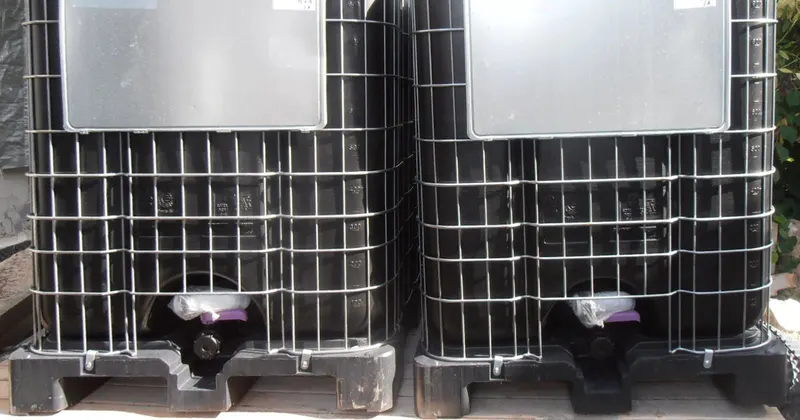
Admixtures make up a small part of the volume of concrete and, at the same time, are one of the components that can shift its cost the most. A plasticiser that is badly dosed, a superplasticiser used "just to make it work" or a tank that nobody reconciles can make a mix cost more than the paperwork says. This article explains how to control admixture consumption at the plant, how to include it properly in the cost per cubic metre and what the Código Estructural (the Spanish Structural Code) says about its use.
What the standard says about admixtures
Article 31 of the Código Estructural (Real Decreto 470/2021, the Spanish royal decree approving the Structural Code) defines admixtures as products added to concrete in a proportion of no more than 5% of the weight of the cement in order to modify one or more of its properties. It lists six types (table 31.2):
- Water reducers or plasticisers.
- High-range water reducers or superplasticisers.
- Setting modifiers: accelerators and retarders.
- Air-entraining agents.
- Multifunctional admixtures.
- Viscosity modifiers.
All of them must carry CE marking in accordance with standard UNE-EN 934-2, and their declaration of performance states the effective range, that is, the proportion to be used. In reinforced or prestressed concrete, admixtures containing chlorides or other components that promote corrosion of the reinforcement must not be used.
For dosing, the Code requires the admixture dispenser to have an accuracy of ±1% (section 51.2.3.5) and sets a tolerance of ±5% on the required weight or volume (section 51.3.2.6). Admixtures can be added at the plant or on site, but adding them on site requires the authorisation of the project management and the knowledge of the supplier (article 31).
Where the admixture that is not in the mix design goes
When actual admixture consumption is higher than theoretical consumption, the causes are usually among these:
- Manual corrections by the operator to adjust consistency, which are not recorded as a change to the mix design.
- Uncalibrated dispensers, which systematically weigh or measure too much.
- Additions on site from the truck, which come out of the plant's tank but do not appear on the delivery note.
- Outdated mix designs: the real dose has changed with the season or with a change of cement, and the recipe in the software has not.
- Losses at reception and in storage: unmeasured deliveries, sedimentation in tanks without agitation or frost damage. The Code requires liquid admixtures to be stored protected from frost and, where necessary, with agitators to keep solids in suspension (section 51.2.2.5).
How to control consumption step by step
- Record every receipt of admixture with its supplier delivery note: product, quantity and price.
- Work out the theoretical consumption of each batch from the mix design and the cubic metres produced.
- Take the actual consumption from what the batching plant records for each batch.
- Compare receipts with consumption every month, by plant and by product, and reconcile with the tank measurement.
- Investigate the differences by mix design, by operator and by site.
The important thing is that actual consumption comes from the batching plant and not from an estimate. It is the difference between knowing that too much is being used and knowing where.
If you have several plants, do the comparison plant by plant. The same admixture in the same mix design can be consumed differently in two plants because of the moisture of the aggregates, the type of mixer or the operator's habits. Differences between plants are a good clue to where adjustments are needed.
And do not forget to calibrate the dispensers. The Code sets the accuracy they must have, but the only way to know they meet it is to check periodically and keep a record. A dispenser that over-measures slightly on every batch makes itself felt at the end of the year.
Admixture in the cost per cubic metre
For the cost of each mix design to be reliable, the admixture has to be included at its real purchase price, transport included, and at the real dose. Here is an example of how the difference shows up, with made-up figures for illustration only:
| Item | Theoretical | Actual |
|---|---|---|
| Superplasticiser dose | 1.0% of cement | 1.2% of cement |
| Cement per m³ | 300 kg | 300 kg |
| Admixture per m³ | 3.0 kg | 3.6 kg |
That difference, multiplied by the price of the admixture and by the cubic metres produced in the month, is money that does not appear on any sales invoice. Repeat the calculation with your own real data.
Bear in mind too that the technical data sheet that Annex 4 of the Code requires for exposure classes XC3, XC4, XD, XS, XF, XA and XM includes the quantity of admixture with its tolerance, and allows a range to be stated to cover variations caused by environmental conditions. If your actual consumption falls outside that range, it is not just a cost problem.
Common mistakes
- Calculating the cost of the mix design with the price from several months ago.
- Not separating admixtures by product and lumping them all into a single "admixtures" line.
- Not recording the admixture added on site.
- Comparing consumption with supplier invoices instead of with actual receipts.
- Not reviewing mix designs when the cement or the admixture supplier changes.
Consumption, stock and cost in one place
Gesthorm collects from the batching plant the raw material consumption of each outgoing delivery note, along with the incoming delivery notes for each raw material, including the cost of the material and of its transport. With that it produces the mass balance: what has come in against what has been consumed, plant by plant, with the stock valued. If the admixture does not add up, you see it.
Each mix design is saved with its composition and Gesthorm calculates its cost per cubic metre, updated as new purchases come in. You can find it in mass balance and stock and in the cost per cubic metre.